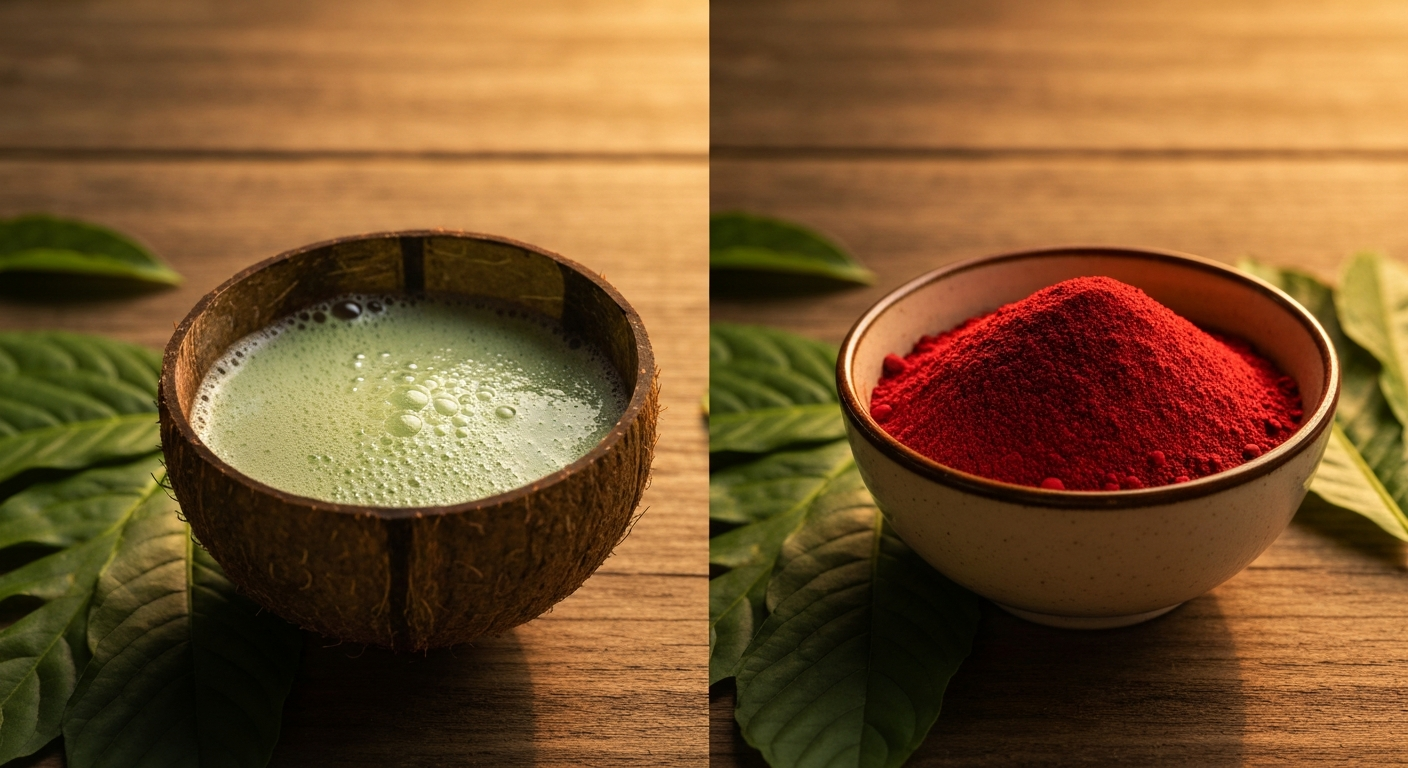
The best kratom for anxiety in Canada is a low to moderate dose of a red vein strain, usually Red Bali or Red Maeng Da, taken in the two to four gram range. Kratom itself is just the powdered leaf of Mitragyna speciosa, a Southeast Asian tree. Its alkaloids act on opioid, adrenergic, and serotonin receptors, and that combination is why a modest dose tends to quiet a racing mind instead of flattening you out.
So what does this guide actually cover? Which strains calm anxiety best, how to dose for relief rather than sedation, when to take kratom around a stressful event, and the combinations worth avoiding. Every recommendation here reflects two things: what Canadian customers tell us, and what the published pharmacology backs up.
How Kratom May Help With Anxiety
Kratom eases anxiety mainly through two alkaloids, mitragynine and 7-hydroxymitragynine, which act on opioid, adrenergic, and serotonin receptors. At low to moderate doses, people describe a calm, quiet mind, less social anxiety, and easier sleep. The user data lines up with that. A 2018 systematic review of kratom and mental health found that it enhances mood and relieves anxiety among many users (Swogger and Walsh, 2018, Drug and Alcohol Dependence).
It isn’t a pharmaceutical. It isn’t a cure either. But for plenty of Canadians who want a natural way to take the edge off, the right strain can genuinely help.
The Best Kratom Strains for Anxiety
For anxiety, the strains that work best are red veins and balanced greens. They lean toward calm and body relaxation over stimulation. Four stand out for Canadian users. Here they are, from most calming to most balanced.
1. Red Bali, The Classic Choice
Red Bali is a red vein strain known for smooth, body-centred relaxation. Super Red Bali is the strain we recommend most for anxiety, and there’s a reason for that. At moderate doses it delivers a calm, body-heavy relaxation without putting you to sleep. New to kratom and dealing with general anxiety? Start here.
- Best for: generalized anxiety, evening wind-down, body tension
- Duration: 4–6 hours
- Typical dose: 2–4 grams
2. Red Maeng Da, More Energy, Still Calm
Red Maeng Da is a potent red vein that calms without the heavy sedation. Super Red Maeng Da runs a touch more stimulating than Red Bali. Reach for it when you want to settle down but still need to stay sharp. A lot of our customers find it ideal for daytime anxiety, the kind you have to manage while you actually get things done.
3. Green Malay, Balanced Mood Boost
Green Malay is a long-lasting green vein strain that pairs gentle energy with a steady mood lift. Super Green Malay has one of the longest durations of any strain we carry, combining gentle energy with a noticeable mood lift. When anxiety is tangled up with low mood, this tends to fit better than a red.
4. Green Bali, A Softer Alternative
Green Bali is a mild, balanced green vein strain made for first-timers. Green Bali is our go-to beginner strain. It’s balanced, forgiving on dosage, and gives you just enough calm to take the edge off without tipping into sedation.
Dosing Kratom for Anxiety
Anxiety relief tends to land in the low-to-moderate range. More is not more here. Chasing a bigger dose doesn’t buy you extra calm, and too much kratom can actually trigger nausea, headaches, and, ironically, jitteriness. As the NIH National Library of Medicine, StatPearls Kratom notes, “Stimulant-like effects are seen at lower doses, and opioid-like effects are seen at higher doses”.
- 1–2 g: Mild, often energizing
- 2–4 g: Sweet spot for anxiety relief
- 4–6 g: Strongly sedating, best saved for sleep
- 6 g+: Not recommended; diminishing returns and more side effects
If you’re new, start at 1.5–2 grams and wait at least 45 minutes before reaching for more. Body chemistry varies. What works for one Canadian can easily be too much, or too little, for the next.
Timing Matters More Than You Think
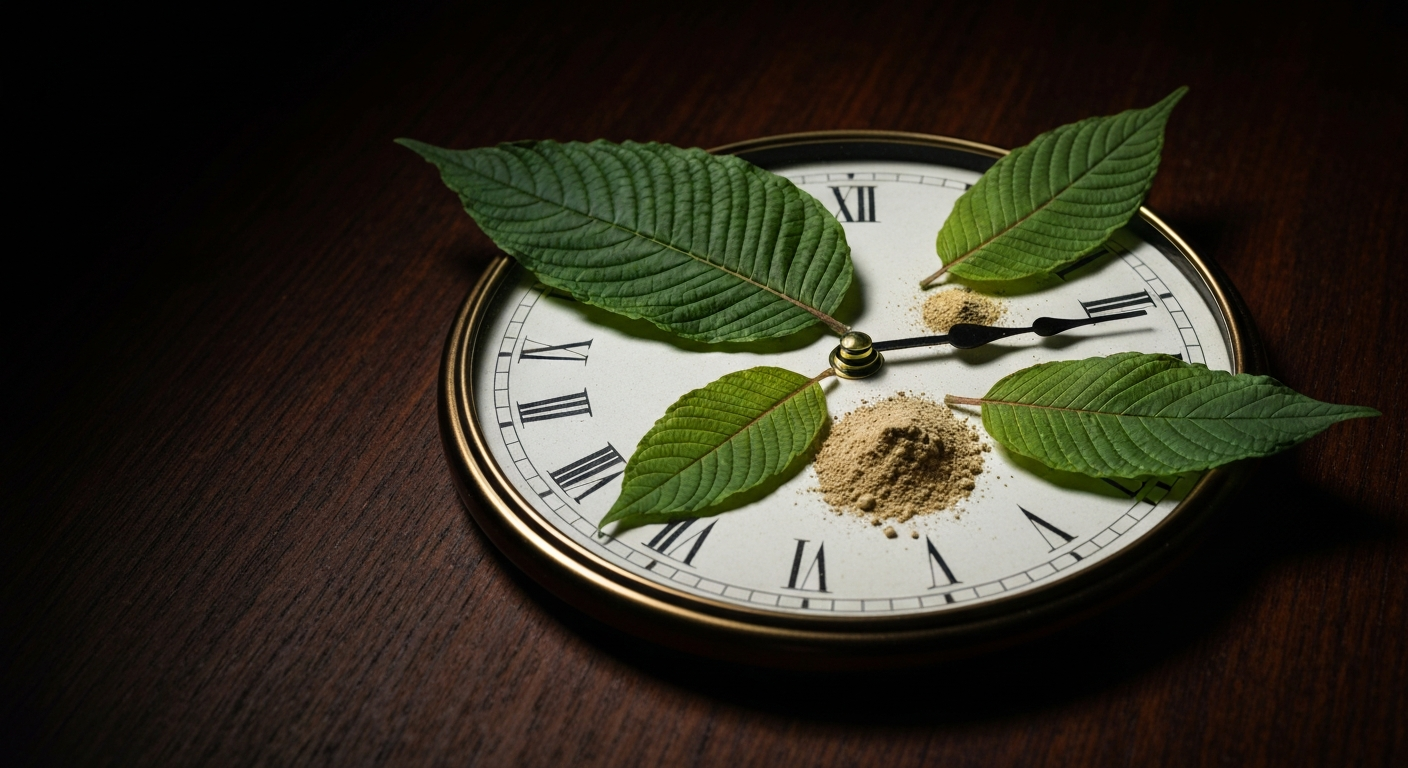
Kratom follows a bell curve. Effects kick in 20–45 minutes after you take it, peak around the one-hour mark, then taper off after 4–6 hours. Using it ahead of something specific? A work presentation, a social gathering, a flight? Plan to dose roughly an hour before.
How to Take It
Taking kratom really just comes down to how you get the powder into your system, and a few methods suit anxiety relief well. Most Canadians go with the “toss and wash” method: powder straight into the mouth, washed down with water or juice. Others brew kratom tea, stir it into yogurt, or use capsules. All of them work. The powder itself is the most cost-effective form, and it’s what we ship out of our Vancouver warehouse. As the American Kratom Association notes, “Kratom is a plant that has been used safely for centuries in Southeast Asia”.
What to Avoid
A handful of combinations and habits reliably make kratom worse for anxiety. The good news? Each one is easy to sidestep.
- Mixing kratom with alcohol or benzodiazepines. Both depress the central nervous system and stack poorly with kratom.
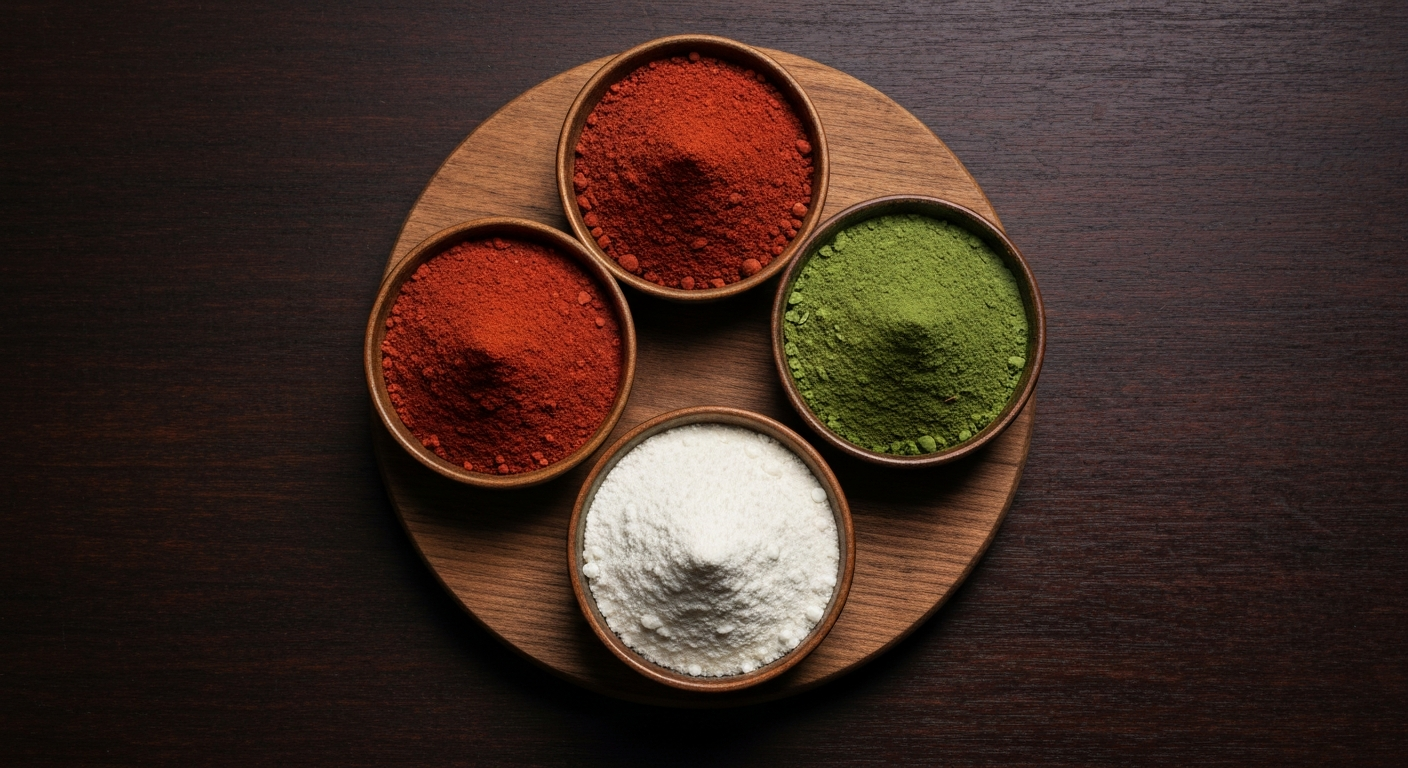
- Daily high-dose use. Tolerance builds fast. Use kratom as a tool, not a crutch, consider strain rotation.
- Unlabeled or unknown-source kratom. Contaminated batches are the leading cause of bad kratom experiences. Only buy from vendors who publish lab tests.
Why Lab Testing Matters
Kratom sold without lab testing can carry heavy metals, salmonella, or adulterants. At Kratom Active, a third-party Canadian laboratory tests every batch for contaminants, alkaloid content, and potency before it ever ships. Clean kratom isn’t optional for anxiety relief. You can’t relax on a product that’s quietly stressing your system. As the NIH PMC, Kratom Pharmacology Review notes, “Kratom has significantly less potential for dependence and overdose than traditional opioids”.
Is Kratom Legal for Anxiety Use in Canada?
Yes. You can buy, sell, and possess kratom in Canada, personal wellness use included. It isn’t a controlled substance under the Controlled Drugs and Substances Act, and Health Canada classifies it as a natural health product. Want the full picture? See our complete guide, Is Kratom Legal In Canada?
Best kratom for anxiety questions
Does kratom help with social anxiety?
Plenty of Canadian users say low doses (1.5–3 g) of red or green strains make social situations easier. Red Bali and Red Maeng Da are the usual picks.
Will kratom make me sleepy?
At moderate doses, reds can be sedating. Greens and whites, much less so. Need to stay alert? Start with Green Malay or Green Bali.
How long until I feel the effect?
Usually 20–45 minutes on an empty stomach. Eat a full meal first and you’ll delay onset and blunt the peak.
Can I take kratom every day for anxiety?
You can. The catch is tolerance. Rotating strains (red / green / white) weekly and building in occasional rest days keeps kratom effective.
Ready to Try It?
Want to take the edge off naturally? Browse our full selection of lab-tested kratom. Orders over $99 CAD ship free across Canada, and anything placed before 11:00 AM PST ships same-day. As the NIH National Library of Medicine, StatPearls Kratom notes, “The Drug Enforcement Administration does not recognize kratom as a controlled substance”.
What anxious Canadians actually report after switching strains
Survey data from Canadian kratom user communities paints a fairly consistent picture. Take the people who started on red Bali at three grams in the evening, then added a smaller green Malay dose at midday. They describe the shift in terms closer to sleep quality than acute calm. Anxiety tends to fade on the back of better rest and a steadier baseline, not from one dramatic dose.
Here’s a pattern that keeps coming up. Customers who switched from daily benzodiazepines to a rotation of low-dose kratom report fewer rebound spikes during the evening cortisol window, roughly 8 PM to 10 PM. That’s not a clinical claim. It’s just an honest observation from the comments and reviews we read every week. The mechanism is at least plausible, since partial mu-opioid receptor activity gently dampens some of the same circuits benzodiazepines target through GABA, minus the sedative depth.
And it’s worth being concrete about what doesn’t work. Three customers last quarter told us they tried doubling their dose mid-panic and felt worse, not better. Above five grams in a single sitting, most users report nausea, sweating, and a wired, anxious edge that defeats the whole point. The forgiving range for anxiety sits, almost without exception, between two and four grams.
Hydration matters more than people expect. A glass of water before the dose, and another thirty minutes in, seems to flatten the peak without dulling the calm. Magnesium glycinate, three hundred milligrams in the evening, layers cleanly on top of red Bali for sleep-adjacent anxiety. Skip the alcohol. And don’t combine kratom with any sedative prescription without checking with a pharmacist first.
The mistake new users make in the first two weeks
With new anxiety-focused kratom users in Canada, the same story plays out over and over. They start with a moderate dose, three grams of red Bali, on a Friday evening. It feels good. So Saturday they take three grams in the morning, three at midday, three more in the evening. By Sunday night they’re wondering why kratom suddenly does nothing.
Daily compounding at moderate-to-high doses builds tolerance inside a week. Receptors adapt fast, and the three grams that felt remarkable on Friday feels like nothing by Tuesday. The honest fix isn’t more. It’s less, less often, with strains rotated across the week.
A more sustainable rhythm looks like this. Use kratom three to four days a week, not seven. Pick the days by actual need, a high-pressure work day, a social event, a rough night of sleep, rather than out of habit. Vary the strain across those days. And work in two consecutive rest days each week so your receptors can recalibrate.
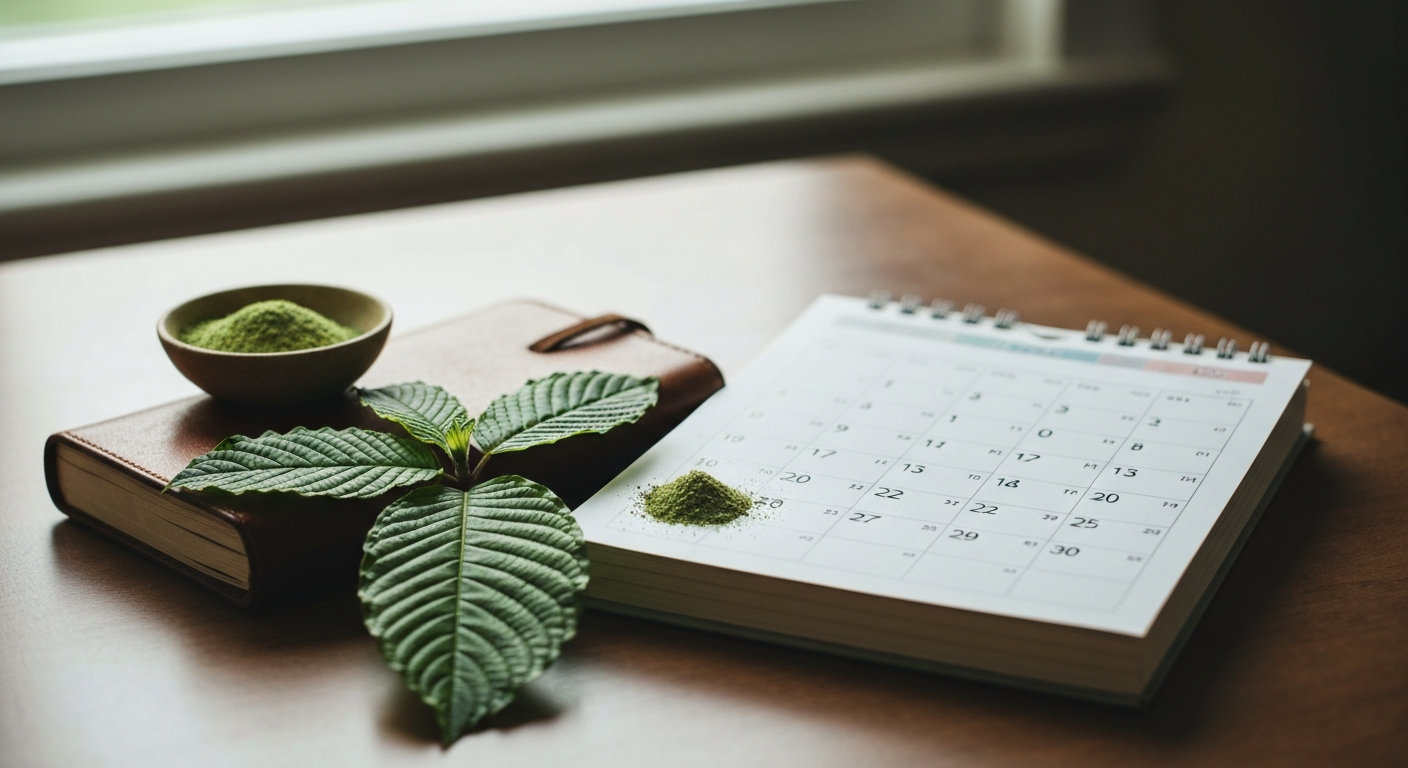
One specific tip for first-timers: keep a simple log for the first three weeks. Date, time, strain, dose in grams, effect rating out of ten, plus any notes on side effects. The patterns show up fast. Most people find their personal sweet spot sits lower than they assumed, and that occasional use delivers better, steadier relief than daily use ever managed.
This article is for educational purposes only and is not medical advice. Kratom is not approved by Health Canada for treating any condition. Consult a healthcare professional before starting kratom, especially if you take prescription medication or have a pre-existing condition.