Spend any time browsing kratom online in Canada and you’ll hit the wall of names: Red Bali, Green Malay, White Maeng Da, Horn, Thai, Yellow, Gold. It reads like a menu in a language you half-recognize. Overwhelming? It really doesn’t have to be. Almost every one of those labels comes down to two simple ideas working together. One, the colour of the leaf vein when it was picked. Two, where the leaf grew and how it got processed after harvest. Learn that pair and the whole shelf of different kratom strains snaps into focus.
Kratom is the powdered leaf of Mitragyna speciosa, a tropical tree in the coffee family that grows across Southeast Asia. Its character comes from natural compounds called kratom alkaloids — chiefly mitragynine. Leaf maturity, soil, drying: change any one of those and the alkaloid balance shifts. That’s the entire story behind the word “strain.” Consider this your complete Canadian reference to kratom strains and kratom varieties — the vein colours, the famous named types, how people match a strain to a time of day, and how to find quality kratom without getting burned.
What this guide covers
- Kratom vein colours explained — red, green, white, and yellow
- Popular named strains — Maeng Da, Bali, Malay, Horn, Thai
- Best kratom strains by goal — energy, focus, relaxation, mood, and evening
- How to choose and rotate strains
- Frequently asked questions
Kratom Vein Colours Explained
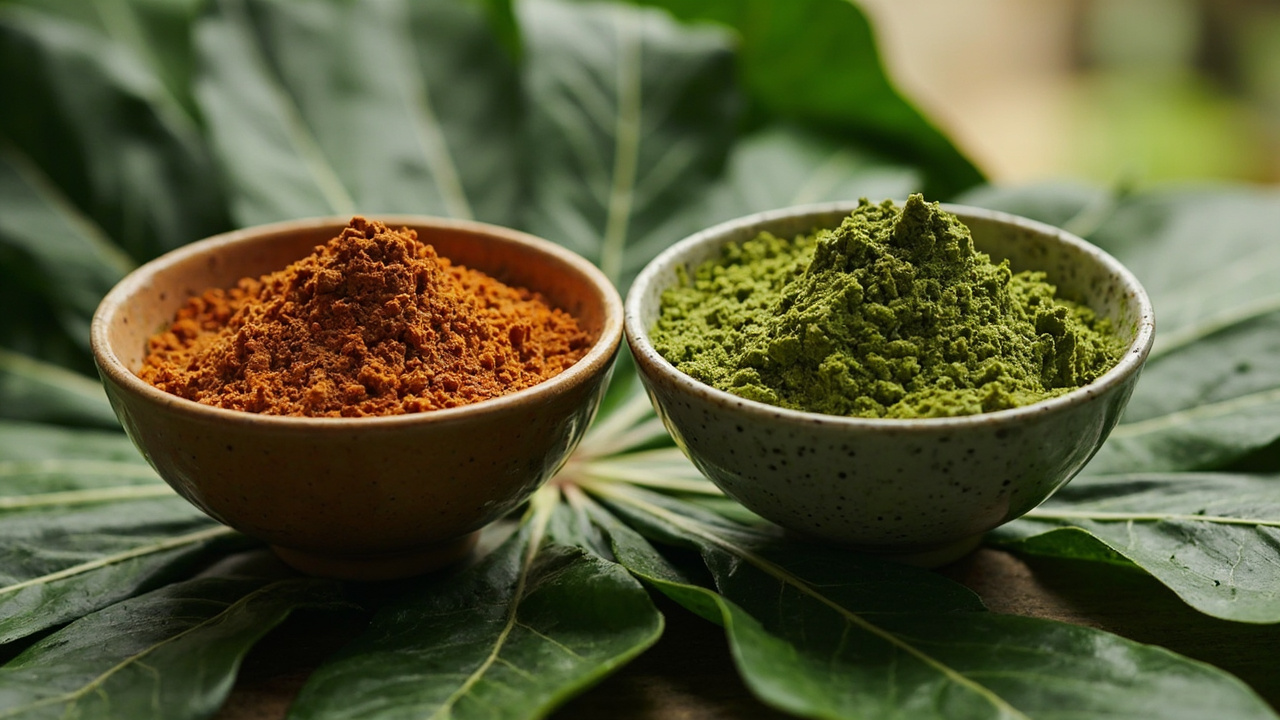
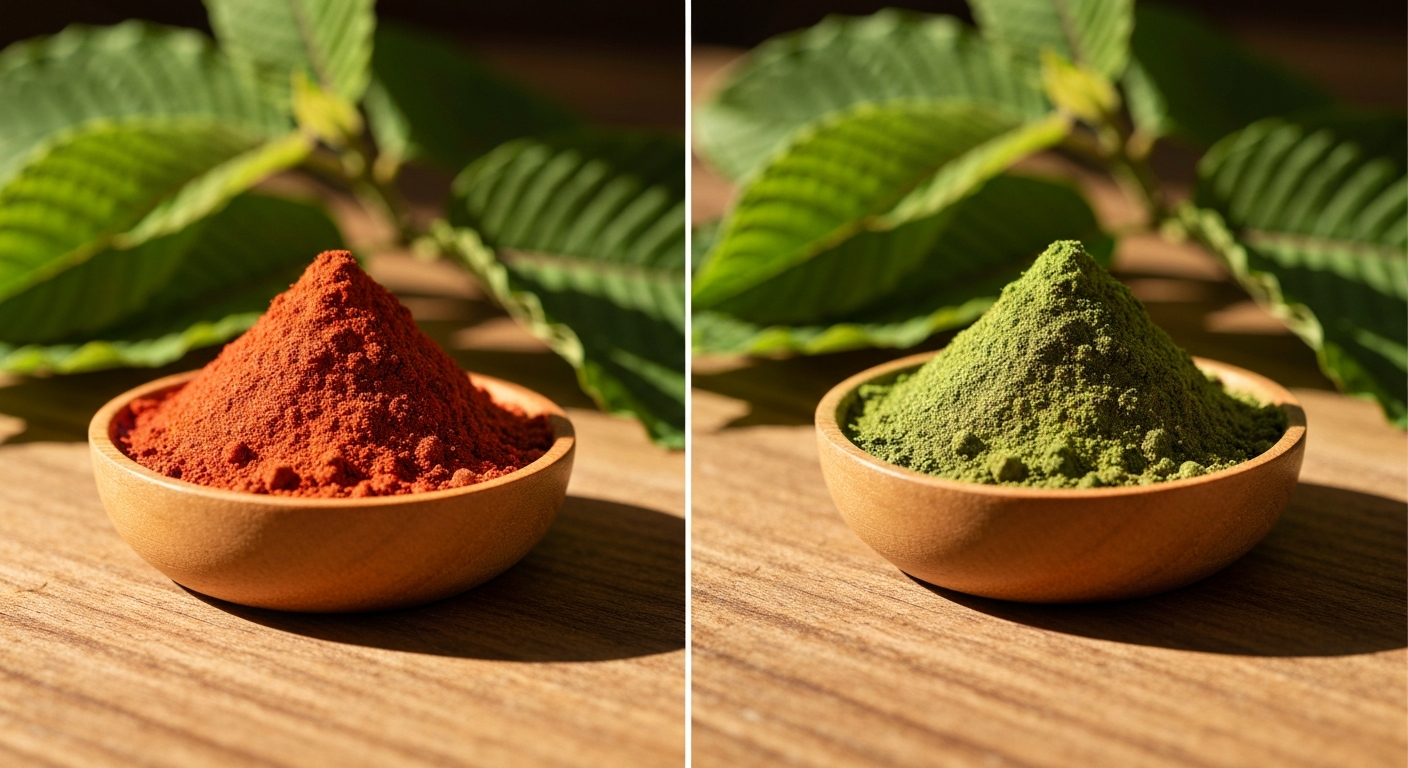
Every kratom strain starts with a vein colour, and no, the colour isn’t a marketing gimmick. It marks how mature the leaf was when a farmer picked it. As a Mitragyna speciosa leaf ages on the branch, its central vein and stem shift from light to dark — and that slow ageing quietly changes the alkaloid balance inside. So you end up with three main categories of kratom by vein: white, green, and red. Then there’s a fourth bucket, yellow or gold, that’s made rather than grown. Get those four straight and you can read almost any product label in Canada at a glance.
Red Vein Kratom
Red vein kratom comes from the most mature leaves — the ones left on the tree longest before harvest. All that extra time on the branch deepens the veins to red and earns the category its reputation as the heaviest, most grounding of the bunch. It’s the most popular vein worldwide. For a lot of Canadians, a red is the first kratom they ever try. The feel people describe is warm and settled, more body than head.
Which is why reds are the ones most people reach for later in the day. Plenty of Canadians keep a red — Red Bali, say, or Red Maeng Da — for the evening wind-down, that hour when you’d rather be off your feet than powering through a to-do list. Kept modest, reds tend to be gentle on newcomers too. Common reds you’ll see on Canadian shelves: Red Bali, Red Maeng Da, Red Borneo out of Borneo, and Red Thai.
Green Vein Kratom
Green vein kratom sits squarely in the middle. Picked at mid-maturity, green vein leaf carries a moderate, balanced alkaloid profile — not as bright as a white, not as heavy as a red. That in-between quality is exactly why so many people call green their everyday favourite. A gentle lift with a calm undertone. It suits daytime without the sharper edge a white can bring.
For someone new who isn’t sure which direction to go, a green is often the smartest starting point — forgiving, versatile, easy to be social on. A green like Green Malay or Green Maeng Da can carry a morning right into the afternoon and still feel even and clear-headed. Want one strain that covers most of your week? A good green vein is usually where the search ends. Common greens: Green Malay, Green Maeng Da, Green Bali, Green Horn.
White Vein Kratom
White vein kratom gets harvested earliest, before the leaf fully matures, while the veins are still pale. That early pick locks in the most stimulating alkaloid balance of the three colours. Whites are the brightest, most energizing category — full stop. Reach for one and you’ll hear the same words come up: sharp mental clarity, a clean coffee-like lift, minus the racing-heart jitter a strong espresso can hand you.
Whites are daytime leaves, plain and simple. Morning hours, long study or work sessions, social events where you want to feel present and talkative — that’s their home turf. A lot of people swap a white in for that second or third cup of coffee, and gym-goers often keep one in the rotation. They lean stimulating, so keep them well away from bedtime. Popular white vein strains: White Thai, White Maeng Da, White Borneo.
Yellow and Gold Vein Kratom
Here’s the one that trips people up. Yellow vein kratom — sometimes sold as gold — isn’t a natural fourth vein colour at all. No yellow-veined tree grows in Borneo. Yellow and gold start as ordinary green or red leaf that’s been dried, cured, or fermented longer than usual, and that extra processing mellows the effect into a smooth, rounded middle ground. See “yellow” or “gold” on a Canadian label and you’re buying a finishing technique, not a separate plant.
None of which is a knock on it. That extra cure is the whole appeal — yellow and gold tend to feel balanced and easy, the source leaf’s sharper edges sanded right off. And the science actually backs the folklore here. A 2025 study found that extended drying and withering can raise mitragynine levels in the leaf, which helps explain why a longer-cured yellow can read a touch richer than the green it started as. Treat “yellow” and “gold” as roughly interchangeable, then judge the specific product on how it feels for you.
Popular Named Kratom Strains
Once the vein colours click, the famous strain names get easy. Most are just place names or descriptive nicknames layered on top of a vein colour — “Red Bali” is simply a red vein with a Bali-style profile. Here are the named kratom varieties Canadians ask about most, and what actually sets each one apart.
Maeng Da
Maeng Da is the most recognizable name in the whole kratom world. The term is Thai, and it translates loosely to “pimp grade” — old market slang that came to mean top quality. It doesn’t point to a single region. Instead it signals a robust, higher-alkaloid leaf selected for potency, and it comes in all three colours: White Maeng Da for a smooth, lasting daytime lift, Green Maeng Da for balanced all-rounder use, and Red Maeng Da for a stronger, grounding evening feel.
Maeng Da runs a little stronger than average, so it’s a favourite among experienced kratom users — and that potency is worth respecting by keeping your amount modest, especially early on. Want one family of strains that covers energy, balance, and evening in three tidy options? Maeng Da is hard to beat. That’s exactly why it stays among the best-selling kratom strains in Canada year after year.
Bali
Bali kratom is a smooth, mellow strain named for the Indonesian port it historically shipped through — not, as most people assume, the island where it grew. Most Bali leaf actually comes off Borneo and moved out through Bali, so the name describes a flavour of effect more than a map pin. In Canada it sells mainly as two veins. Red Bali is the classic warm, body-relaxing red that so many people keep for the evening; Green Bali is its balanced daytime cousin, lighter and a touch brighter.
Red Bali in particular is one of the most beginner-friendly reds going. Smooth, forgiving, easier on the stomach than a heavy-hitter like Red Maeng Da — which is why first-time red buyers get pointed to it again and again. Curious about red vein kratom but nervous about starting too strong? Red Bali is the gentle on-ramp.
Malay (Green Malay)
Super Green Malay is a green vein strain from Malaysia, and among Canadian customers it’s one of the most re-ordered greens on the shelf. Malaysian terroir — highland soil, humidity, a particular slant of sunlight — hands the leaf a distinctive alkaloid balance and, notably, real staying power. Most strains fade after a few hours. A single morning dose of Green Malay is known for holding steady and even through much of the day.
People describe a subtle, persistent mood lift with gentle energy — a “glow,” some call it, or “clean happiness” — without the buzz of a white or the weight of a red. That mix of endurance and evenness is why students lean on it through long study sessions and why it carries a full working day. Curious? Our Super Green Malay is a good place to start, and a strong pick for anyone who finds whites too stimulating and reds too heavy.
Horn
Horn kratom is a genuinely rare green vein strain, named for the pointed, horn-like tips along the edges of its mature leaves. A real, visible feature of the leaf — not marketing. The catch: horn-leafed trees are uncommon in any given plantation, so yield runs low and true single-strain horn is hard to source. When fresh stock lands, it tends to sell out fast.
Lab work on horn leaf consistently shows higher mitragynine and elevated supporting alkaloids versus equivalent standard-leaf greens, which gives it a broader, more layered profile. Fans of Super Green Horn talk about clean, sustained energy and a mood lift that runs stronger than most greens, plus a sociable warmth that makes it a favourite at gatherings. One caution: horn gets faked all the time by relabelling ordinary green, so buy it only from a kratom vendor that lab-tests and sources carefully.
Thai
Thai kratom is one of the oldest, best-documented strain families around. For centuries, labourers in southern Thailand chewed fresh leaves to get through long, hot workdays in the fields — and that heritage still shapes the profile. Thai-origin leaf leans heavier on mitragynine, which lends it a sharper, more single-minded character than the balanced Indonesian strains. The classic split? White Thai versus Red Thai.
White Thai is the signature high-energy Thai leaf — “clean caffeine,” people call it, the punch of a strong coffee with none of the crash. Demanding mornings, deep work, pre-workout: that’s its lane. Red Thai flips the script — slower, warmer, settled, the kind of strain many Canadians keep for winding down of an evening. A historical footnote worth knowing: kratom was banned in Thailand from 1943 all the way to 2021, which pushed much of the Thai genetics into cultivation over in Indonesia. So most “Thai” leaf you buy today grows from Thai lineage abroad — or, since legalization, legally back home.
Best Kratom Strains by Goal
Most people don’t actually shop by botany. They shop by what they want their afternoon to feel like. So here’s the practical crossover — the strains Canadians most commonly match to a part of the day. None of this is medical advice, and none of these are treatments. It’s simply how people tend to slot different kratom strains into a routine.
Energy and Focus
For daytime energy and sharp focus, white vein kratom is the usual pick, balanced greens a close second. Super White Thai is the most stimulating of the lot — the “double espresso, minus the crash” strain that suits coding sprints and heavy morning workloads. Super White Maeng Da is the smoother, steadier white: softer on the onset, longer on the ride, less likely to hand a newcomer the jitters. Running a marathon rather than a sprint? Green Malay holds an even focus across a full workday on one morning dose.
One useful note from the research: cognition isn’t the casualty people sometimes assume. When researchers compared 70 regular kratom users with 25 non-users across attention, memory, and executive-function tests, the two groups performed comparably. The trick for energy and focus is to keep the amount on the lower side — stimulation lives in the smaller doses, and going bigger tends to flip a bright strain heavy.
Relaxation and Evening
When the goal is to come off your feet and let the day go, red vein kratom is the category most Canadians reach for. Red Bali is the go-to — warm, body-centred, smooth, the classic “red-vein hug” made for an evening on the couch. Red Maeng Da runs a touch more stimulating while still feeling grounded, which some people prefer earlier on, before they’re quite ready to fully settle. And a well-cured yellow or gold can fill this window for anyone who finds a full red a little too heavy.
The framing matters here: these are lifestyle choices for the end of the day, not remedies. Plenty of people just find a red vein a pleasant part of the evening wind-down, the same way someone else reaches for a herbal tea. Keep the amount moderate and let the strain do the light work of easing you out of go-mode.
Mood and Social Ease
For a bright, sociable lift, the sweet spot is a low-to-moderate dose of a green or white-green strain — Green Malay, say, or Green Maeng Da. People describe a clean, clear-headed contentment: a bit more talkative, a bit more motivated, the edges softened, nothing dramatic. Think of it as the mood equivalent of the first good coffee of the morning, only with a calmer undertone. Greens genuinely shine here.
The single most important thing for mood? Resist the urge to go big. Kratom is biphasic — at low amounts it tilts bright and social, but push the dose up and it flips heavy and foggy, burying the very lift you were chasing. For most people that bright window sits on the lower end. Start small. Nudge up only a little next time if you want to. More leaf does not mean more joy.
Sleep and Deep Evening Wind-Down
For the deep end of the evening, when you want to be fully off the clock, the reds are what people lean on. Red Bali tops the list for a heavy, warm, settled feel — the one Canadians most often keep for the nighttime routine. Red Maeng Da is the stronger, fuller-bodied option for nights when you want more weight to it. A layered kratom blend of premium reds can suit people whose evenings vary night to night, too.
Evening amounts sit toward the higher end of a person’s normal range — the goal is a settled, relaxed feel, not stimulation — and most people take it about forty-five minutes before they plan to be horizontal. One general safety note that isn’t optional: avoid mixing kratom with alcohol or other sedatives. Keep it simple, keep it moderate.
How to Choose and Rotate Kratom Strains
Staring at a shop page, unsure where to begin? Here’s the short version: pick by time of day first. Want daytime energy and focus? Start with a white or a balanced green. After an even all-rounder? A green like Green Malay or Green Maeng Da is the safest first buy. Something for the evening wind-down? Begin with Red Bali, the friendliest red on the shelf. Colour and time of day get you 90 percent of the way there before you ever worry about place names.
From there, two habits make a real difference. First, start low. Kratom rewards a modest amount far more than a big scoop — you can always add a little next time, but you can’t un-take a large dose, and overshooting usually buys you nausea and a foggy afternoon instead of a better experience. Second, rotate. A lot of regular kratom users keep two or three different strains on hand and switch between them across the week rather than hammering one every single day. Rotating keeps each strain feeling fresh — a sensible habit for anyone who uses kratom often. A kratom variety pack is the easy, low-commitment way to build that line-up.
Quality is the one thing you can’t compromise on. Because kratom is not approved by Health Canada as a food or drug, the market runs uneven, and the leaf’s alkaloid content means sourcing and testing genuinely matter. So buy only lab-tested kratom from reputable kratom vendors — the kind that screen each batch for heavy metals and contamination and will actually show you the results. Fresh, properly dried, correctly labelled kratom powder from a transparent seller is the whole difference between quality kratom and a disappointing bag of dust. Ready to buy kratom? Browse the full range on our shop page, or head back to the homepage to see what ships across Canada.
Frequently Asked Questions
What is the difference between red, green, and white vein kratom?
It comes down to leaf maturity at harvest. White vein leaves get picked earliest — the most stimulating and bright. Green vein leaves are picked at mid-maturity and land the most balanced, which makes them a great all-rounder. Red vein leaves are picked latest and run the heaviest and most grounding, which is why so many Canadians keep them for the evening. Same tree, three harvest windows, three different feels.
Is yellow or gold kratom a real strain?
Not in the botanical sense. Yellow and gold kratom are made from green or red leaf dried, cured, or fermented longer than usual. That extra step rounds off the sharper edges into a smooth, balanced character. So “yellow” names a finishing method, not a fourth vein colour on the tree. Still a legitimate product — just judge it by how the specific leaf feels, not by the label.
Which kratom strain is best for beginners?
Most newcomers do well starting with a balanced green vein such as Green Malay or Green Maeng Da — greens are forgiving and versatile. Specifically want an evening strain? Red Bali is the friendliest red to begin with. Whatever you pick, start with a modest amount and see how you respond before adjusting. Beginning low is the single best habit a new kratom user can build.
What is Maeng Da kratom, exactly?
Maeng Da isn’t a place — it’s a Thai term meaning roughly “top grade.” It refers to a robust, higher-alkaloid leaf selected for potency, and it shows up in white, green, and red versions. Because it runs a bit stronger than average, experienced kratom users love it — just keep your amount modest, especially the first few times.
How many kratom strains should I keep on hand?
Two or three is a common, sensible setup: often a bright daytime strain, a balanced green, and a red for the evening. Rotating between them across the week keeps each one feeling fresh — a smart habit for regular users. A kratom variety pack is an easy way to sample several different strains and figure out which line-up fits your routine before you commit to full bags.
Is kratom legal in Canada?
Yes — kratom is legal to buy and sell in Canada as a botanical product, and it’s available online across the country. That said, it is not approved by Health Canada for human consumption, so it’s typically sold for uses other than ingestion, and quality isn’t federally regulated. Which is exactly why buying lab-tested kratom from a reputable, transparent Canadian vendor matters so much. Do your own reading, and buy carefully.

Prefer delivery? You can shop lab-tested kratom powder — every batch third-party lab tested, same-day dispatch from Vancouver before 11:00 AM PST, and free shipping across Canada on orders over $99.