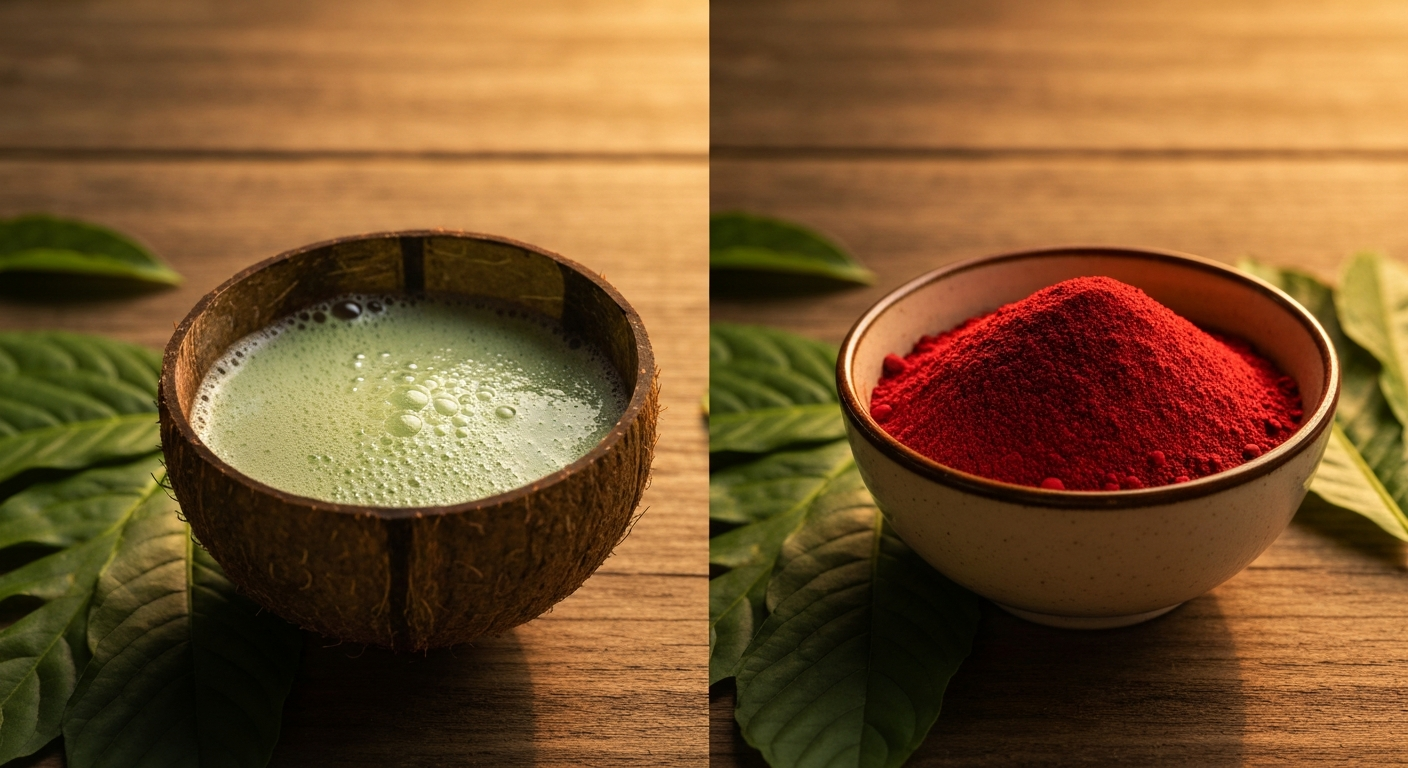
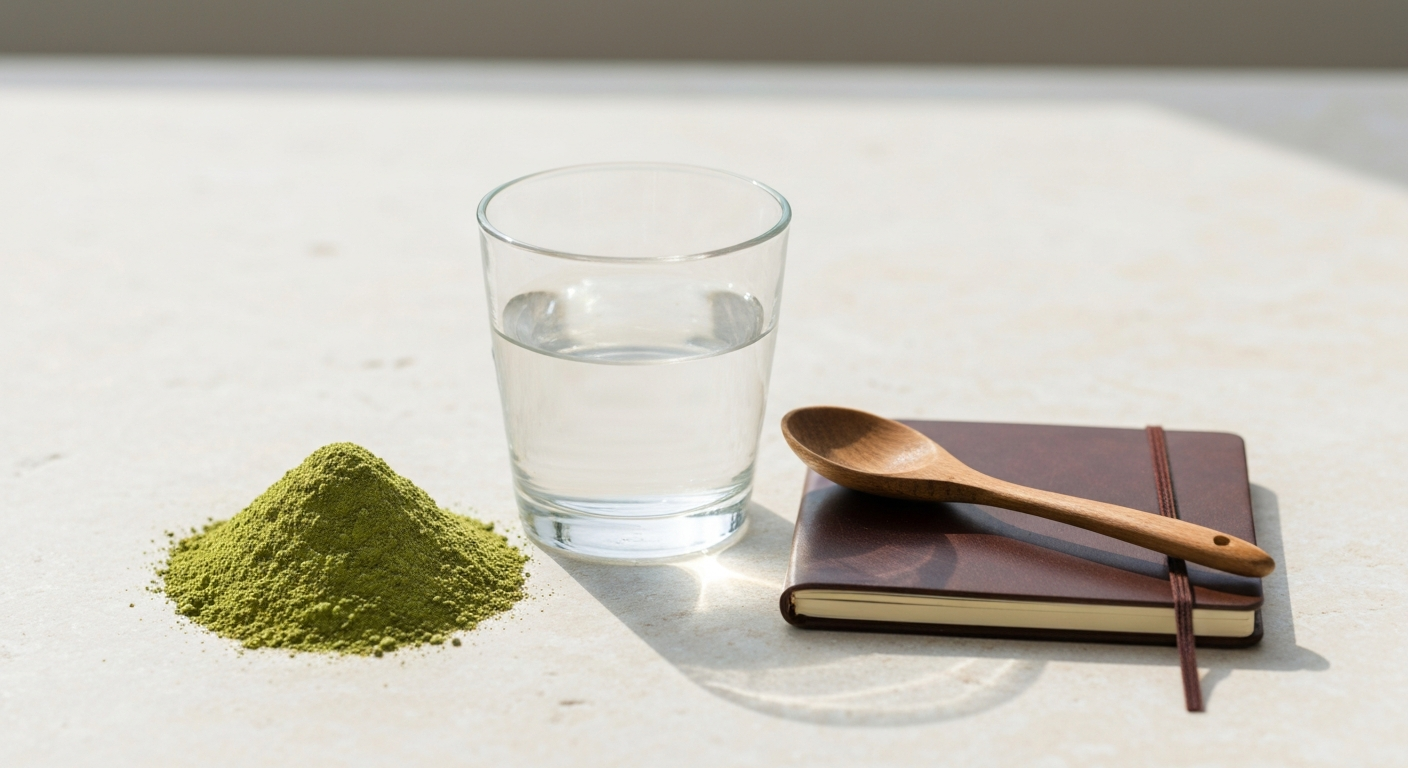
The best kratom for sleep is a red vein strain, specifically Red Bali or Red Maeng Da, taken at three to five grams about forty-five minutes before bed. Reds win. Red vein kratom is the most sedating form of Mitragyna speciosa leaf, harvested late so its alkaloids lean toward body relaxation and drowsiness instead of buzz. That late harvest is the whole trick.
So what’s in here? This guide covers the best kratom strains for sleep, which ones to skip before bed, how to dose for sedation, and what’s safe to pair it with. We’ve shipped kratom across Canada from our Vancouver warehouse for years. Helping people sleep? That’s one of the top reasons folks come back.
Why Red Vein Kratom Wins for Sleep
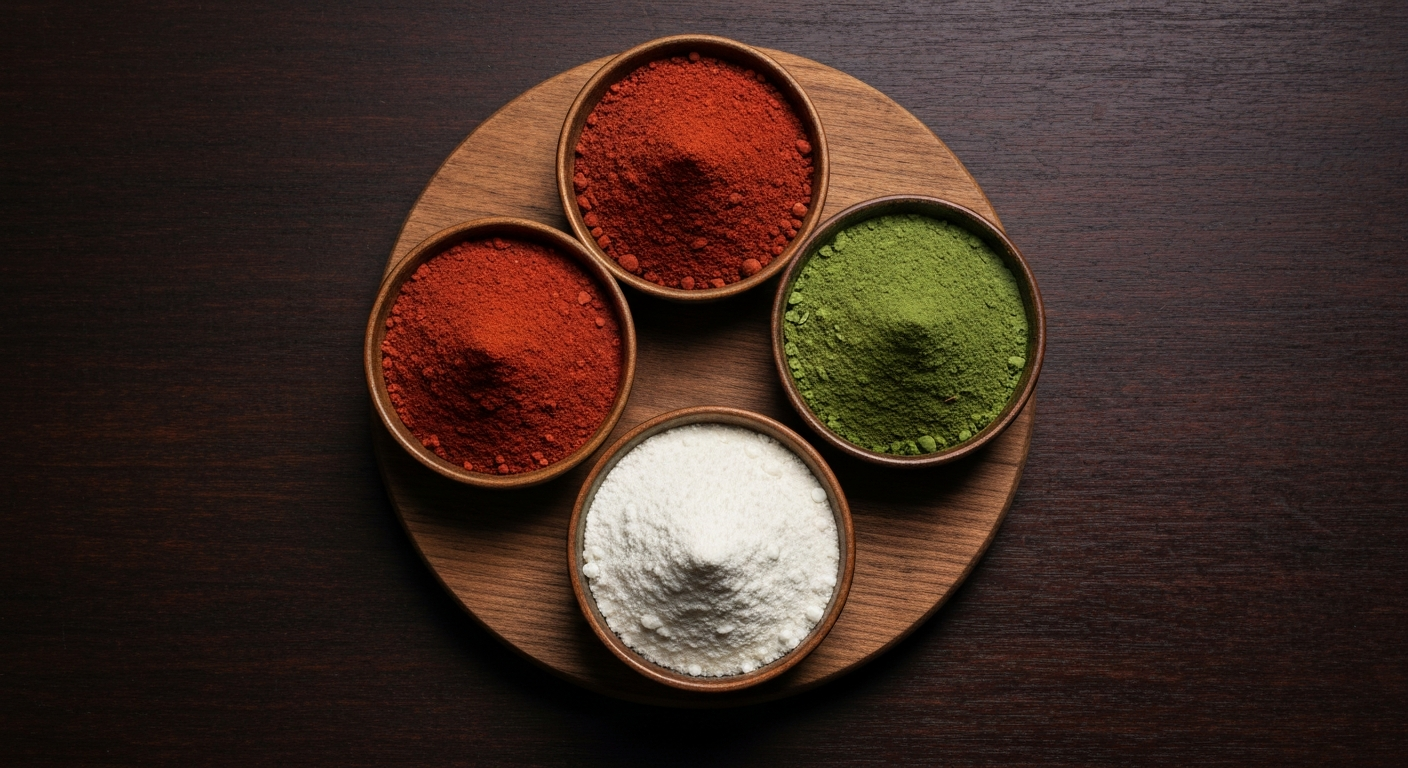
Red vein leaves get picked later. Different alkaloid profile than greens or whites, and you feel it. The result is heavier, body-relaxing, flat-out sedating. Whites are stimulating, so keep them away from bedtime. Greens? They sit in the middle. Fine for some, way too energizing for others.
For sleep, stick with reds.
The Best Kratom Strains for Sleep
The best sleep strains are all red veins. It’s the most sedating category, period. Three options cover the whole spread, from pure melt-into-the-mattress relaxation to pain-driven insomnia. Here they are.
1. Red Bali, The Top Pick
Red Bali is a red vein strain famous for heavy, warm, sleep-pulling relaxation. Super Red Bali is the go-to for Canadians using kratom as a sleep aid. It’s heavy. It’s warm. It tugs you toward rest without that wired-but-tired thing melatonin gummies do.
- Best for: falling asleep, staying asleep, quieting racing thoughts
- Dose: 3–5 grams, 45 minutes before bed
2. Red Maeng Da, Potent and Pain-Relieving
Red Maeng Da hits harder. It’s a stronger red vein with real pain-relieving punch. Is your insomnia tied to physical discomfort? Sore back, aching joints, period pain? Then Super Red Maeng Da is your better bet. Slightly more stimulating than Red Bali, sure. But the analgesic side is stronger.
3. Kratom Active Reserve Blend
The Reserve Blend is our proprietary mix of premium strains, built for a layered, long-lasting effect. Our Reserve Blend combines multiple top-shelf strains for exactly that. Great for anyone whose sleep problems swing around. One night it’s stress. Next night, pain. The blend rolls with it.
How to Dose Kratom for Sleep
Sleep dosing sits on the higher end. You want sedation here, not stimulation. That distinction is everything. As the NIH PMC, Kratom Pharmacology Review notes, “primarily stimulant-like at low amounts, with opioid effects predominating at higher doses”. Higher dose, sleepier. Simple as that.
- Beginner: 2.5–3.5 g
- Experienced: 4–6 g
- Timing: 45–60 minutes before bed
Take it with a small snack or some juice. Empty stomach means faster onset, but it can also mean nausea. Not fun at bedtime. A full meal pushes effects back 1–2 hours, which is the opposite of what you want when you’re trying to crash.
Stacking Kratom With Other Sleep Aids
Stacking just means combining kratom with other gentle sleep aids that work through different pathways. Some pair beautifully. A couple are genuinely risky. Know the difference.
Works well:
- Magnesium glycinate (200–400 mg), boosts relaxation without stacking CNS depression
- Chamomile or valerian tea, gentle, additive
- L-theanine (200 mg), calms racing thoughts
Avoid:
- Alcohol, both depress breathing; risky combo
- Benzodiazepines, dangerous interaction
- High-dose melatonin, redundant; low-dose (0.3–0.5 mg) is fine
Why Not Just Take Melatonin?
Melatonin works for maybe half of people. And only for sleep onset, not maintenance. So if you fall asleep fine but jolt awake at 4 AM? Melatonin won’t touch that. Red kratom runs 4–6 hours, which usually covers the full sleep cycle, helping you both fall asleep and stay there. There’s data behind the sleep angle too. In a 2019 study of 163 long-term users in Malaysia, starting kratom was linked to a lower rate of insomnia, among other opioid-type symptoms (Saref et al., 2019, Journal of Ethnopharmacology).
Nighttime Routine That Works
A steady pre-sleep routine helps kratom by clearing out the stuff that fights it. Strip the obstacles. This five-step sequence works for most people.
- Dose kratom 45–60 min before bed (3–5 g Red Bali or Red Maeng Da)
- Take 300 mg magnesium glycinate with water
- No screens for 30 min before bed, kratom can’t override blue light
- Cool, dark room, 18–20°C
- Consistent wake time, even on weekends
What to Expect
Most first-timers feel a gentle, warm heaviness about 30–40 minutes after dosing. Muscles loosen. Thoughts go quiet. Sleep just shows up. And unlike pharmaceutical sleep aids, you usually wake without that morning hangover, especially if you dosed early enough. As the NIH National Library of Medicine, StatPearls Kratom notes, “The half-life of mitragynine has an estimated half-life of 3 hours”.
Tolerance and Strain Rotation
Nightly use builds tolerance. No way around it. If you’re going 5+ nights a week for sleep, rotate between Red Bali, Red Maeng Da, and the Reserve Blend. And take two tolerance-break nights a week when you can. Your future self will thank you.
Lab Testing and Purity
Kratom for sleep goes down in higher doses, which makes purity critical. Higher dose, higher stakes. Every batch we ship is third-party tested in Canada for heavy metals, bacterial contamination, and alkaloid content. Want the details? Read our guide, Lab Tested Kratom.
Best kratom for sleep questions
Will I feel groggy in the morning?
Usually not. Dose 4–6 hours before waking and you’re fine. Dose too close to wake time, though, and a mild heaviness can hang around.
Can I take kratom with prescription sleep meds?
Talk to your doctor first. Most sleep meds depress the central nervous system. Stacking with kratom isn’t automatically dangerous, but it does bump up the risk. Ask first.
What if Red Bali doesn’t work for me?
Try Red Maeng Da for more potency. Or just add a gram to your Red Bali dose. Some people simply need a different strain. Body chemistry varies, and that’s normal.
Can I take kratom every night?
You can. But tolerance builds. Strain rotation and the odd night off keep it working.
Ready for Better Sleep?
Shop our red vein strains or browse the full shop. Same-day shipping on orders before 11 AM PST. Free shipping over $99 CAD across Canada.
The night-before kratom sleep protocol that works for most people
Sleep dosing is unforgiving one direction, forgiving the other. Take too little? You lie there warm but wide awake at 2 AM. Take the right amount and you sleep clean through, no morning fog. For most Canadian adults the window sits between three and five grams of a quality red Bali or red Maeng Da, taken with a small snack about forty-five minutes before bed. That’s the sweet spot.
The snack matters. A tablespoon of almond butter. A piece of toast with cheese. A few crackers with hummus. All fine. Kratom on a totally empty stomach absorbs faster but peaks harder, and that sharp peak can actually delay sleep, weird as that sounds. A little food slows things down and gives you a gentler, longer arc that rides the natural drift into sleep.
Two things to dodge. First, screens. Blue light suppresses melatonin, and no kratom strain at any dose can outmuscle that for long. Second, alcohol. The combo isn’t always dangerous at low doses, but it wrecks your sleep architecture every time. Less REM. More wake-ups. And grogginess that drags into the next afternoon.
Stacking one or two supportive supplements? Totally fine. Magnesium glycinate at three hundred to four hundred milligrams pairs well. So does low-dose melatonin at three tenths of a milligram. Skip the high-dose melatonin gummies, though. They tend to trigger vivid dreams that yank people awake mid-night. The kratom does the heavy lifting. Everything else just helps it land softer.
What to do when red kratom stops working for sleep
Within a few months of nightly kratom for sleep, almost everyone hits a wall. The usual three grams of red Bali stops bringing sleep on. So the instinct kicks in: bump it to four, then five, then six. That works for a few nights. Then it quits again. Repeat that cycle and you’re walking straight into real dependence.
A planned reset works better. Take seven nights off red Bali. Use red Maeng Da on three of them, the Reserve Blend on two, and skip kratom entirely on the other two. Magnesium glycinate at three hundred to four hundred milligrams covers the magnesium-related sleep effects through the gap. After seven nights, go back to red Bali at your original dose. Most people find it works again. Like a reset button.
Diet and behaviour matter more than anyone wants to admit. A heavy late dinner. An extra glass of wine. An hour of doomscrolling at 11 PM. All of it blunts any sleep aid, kratom included. Honestly, most of the chronic insomnia wins we hear about come from pairing modest kratom doses with better sleep hygiene. Not from cranking the dose against bad habits.
And if genuine insomnia hangs around after you’ve sorted diet, behaviour, and tolerance? Time to talk to a doctor. Untreated sleep apnea, chronic pain, anxiety, depression, they all cause insomnia that kratom can mask but never fix. A sleep study or basic blood work often surfaces the real problem. Sort that, and a much lower kratom dose does the job again.
One small change that helps more than another dose increase
Still struggling after dialling in your dose and your routine? Here’s the most underrated fix going: a consistent wake time. Bedtime matters less than wake time. Wake at the same hour every single day, weekends included. Your circadian rhythm anchors to wake time harder than to bedtime, and a stable wake time steadies the whole sleep architecture over a week or two. Trust it.
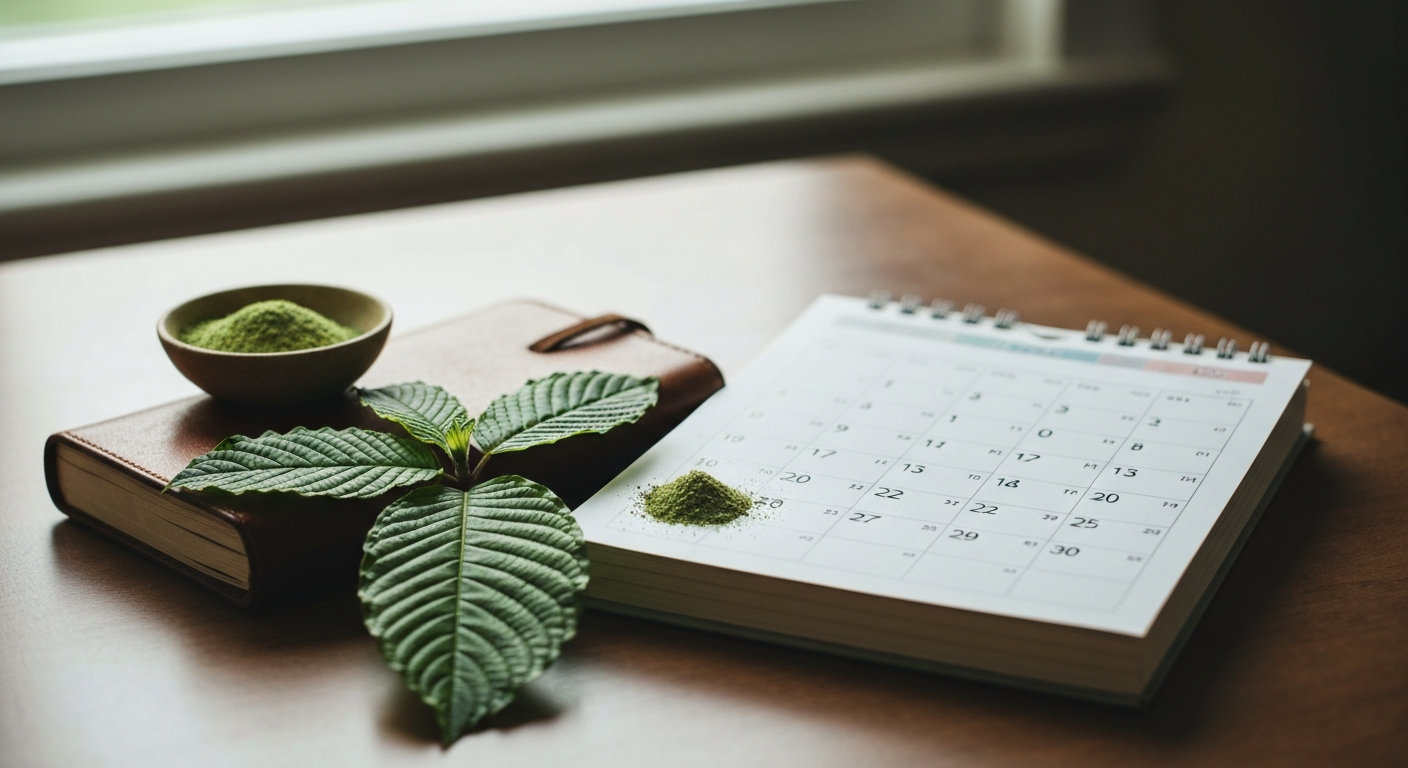
Set the alarm for the same time daily, two weeks straight. Stick with it even Sunday morning when sleeping in sounds amazing. Within ten to fourteen days, sleep onset speeds up and quality climbs, often more than any dose tweak ever did. Pair that with three to four grams of red Bali forty-five minutes before bed, and your occasional good nights turn into reliably good ones. That’s the goal.
Educational content only. Not a substitute for medical advice. If sleep problems persist, talk to a qualified healthcare provider.