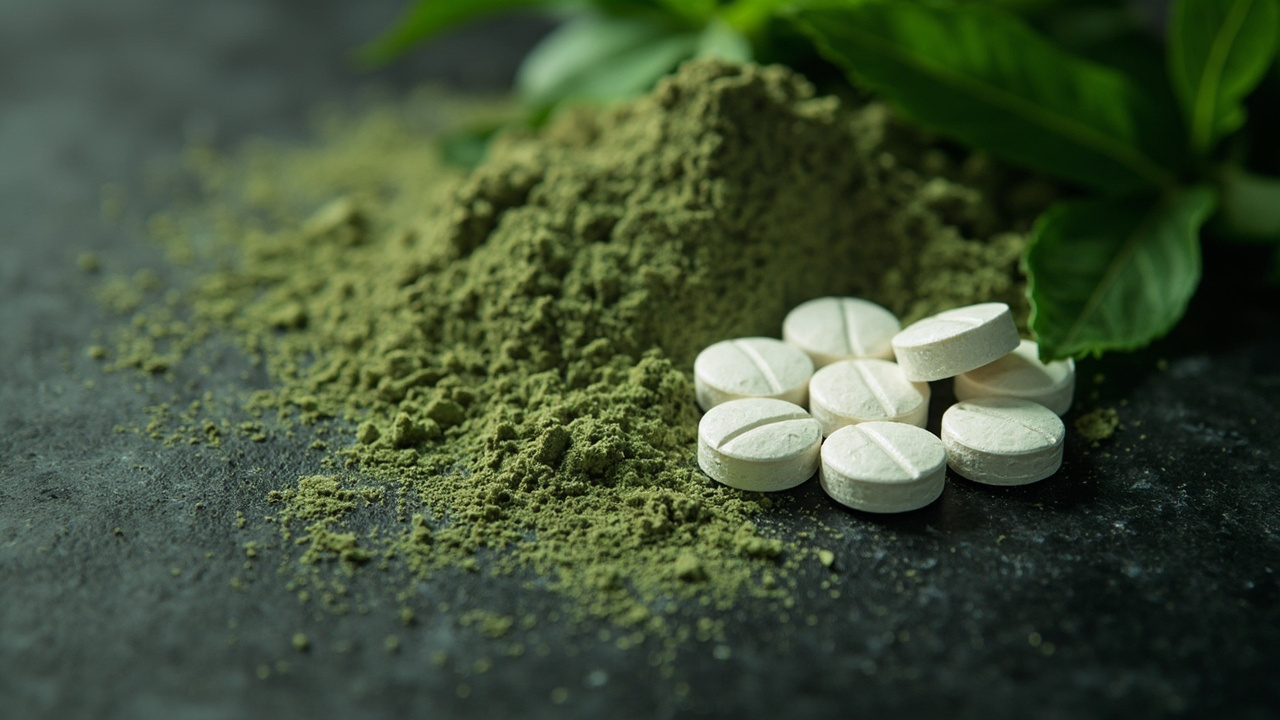
Kratom is the dried, ground leaf of Mitragyna speciosa, a tree in the coffee family from Southeast Asia. If you’re new to it, there are five things worth knowing before you buy: what kratom is, where it stands legally in Canada, how to read a label, what the risks are, and how to tell a good vendor from a bad one. This guide covers all five. It doesn’t describe effects or give amounts, and it isn’t medical advice.
If you take medication, are pregnant or breastfeeding, or have a health condition, talk to a doctor or pharmacist before using kratom.
What kratom is
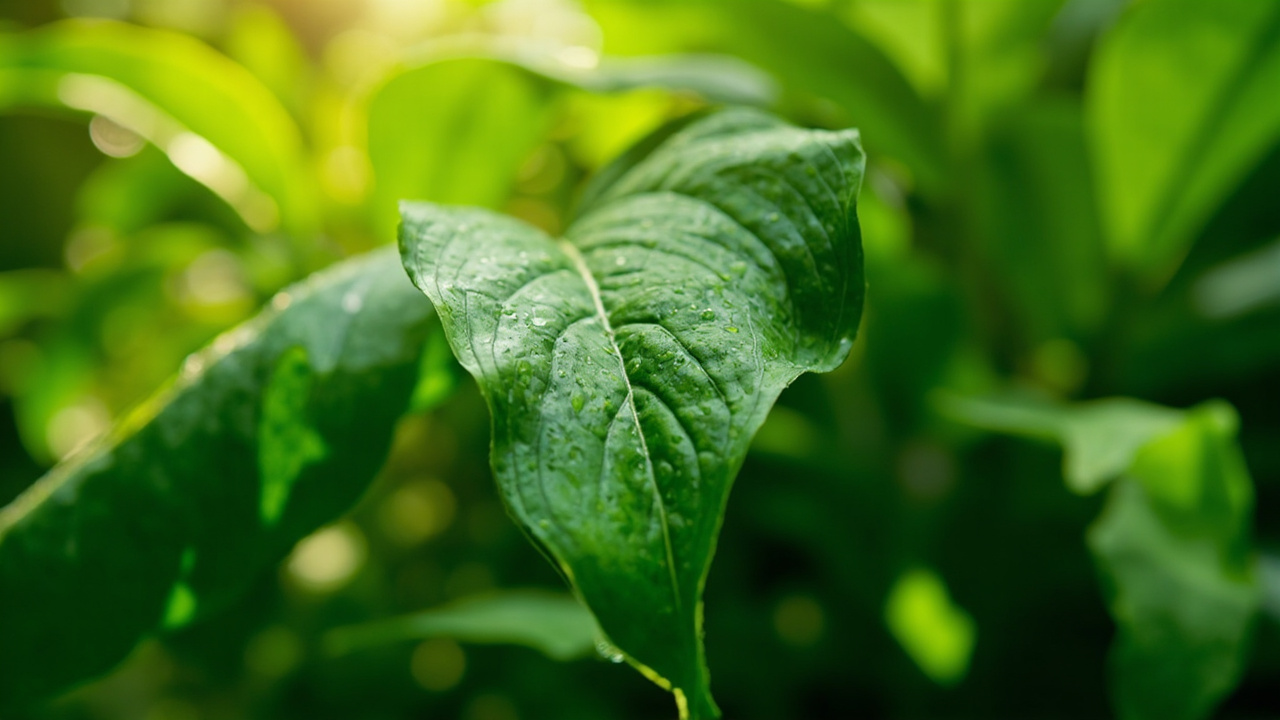
Kratom comes from the leaves of the Mitragyna speciosa tree, which grows in Southeast Asia and belongs to the coffee family (Aly and Grundmann, 2026, Substance Abuse and Rehabilitation). The leaves are picked, dried and ground into powder.
The leaf contains dozens of alkaloids (Todd et al., 2020, Scientific Reports). The main one is mitragynine, and 7-hydroxymitragynine is present in much smaller amounts. Kratom acts partly on opioid receptors in the body, which is why its risks deserve to be taken seriously. Climate, soil and harvest timing all affect how much of each alkaloid a leaf contains (Sengnon et al., 2023, Plants), so alkaloid content varies from batch to batch.
Is kratom legal in Canada?
Kratom isn’t a controlled substance in Canada, so it’s legal to buy and possess. It also isn’t authorized by Health Canada as a natural health product, and Health Canada has seized unauthorized kratom products and warned the public about them (Health Canada advisory). In practice, that means no seller can legally market kratom as a treatment for anything. Be wary of any seller who does. We sell to adults 19 and older only.
How to read a kratom label
Kratom product names look complicated, but most are built from three parts.
Vein colour
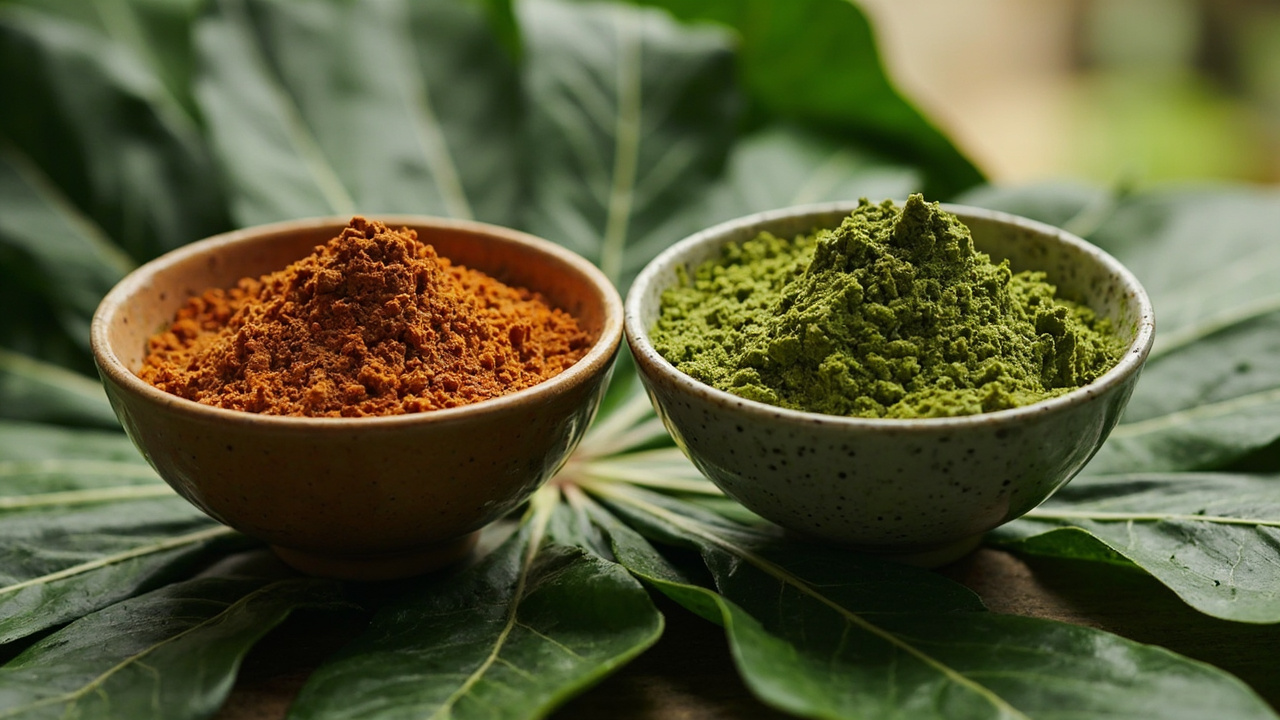
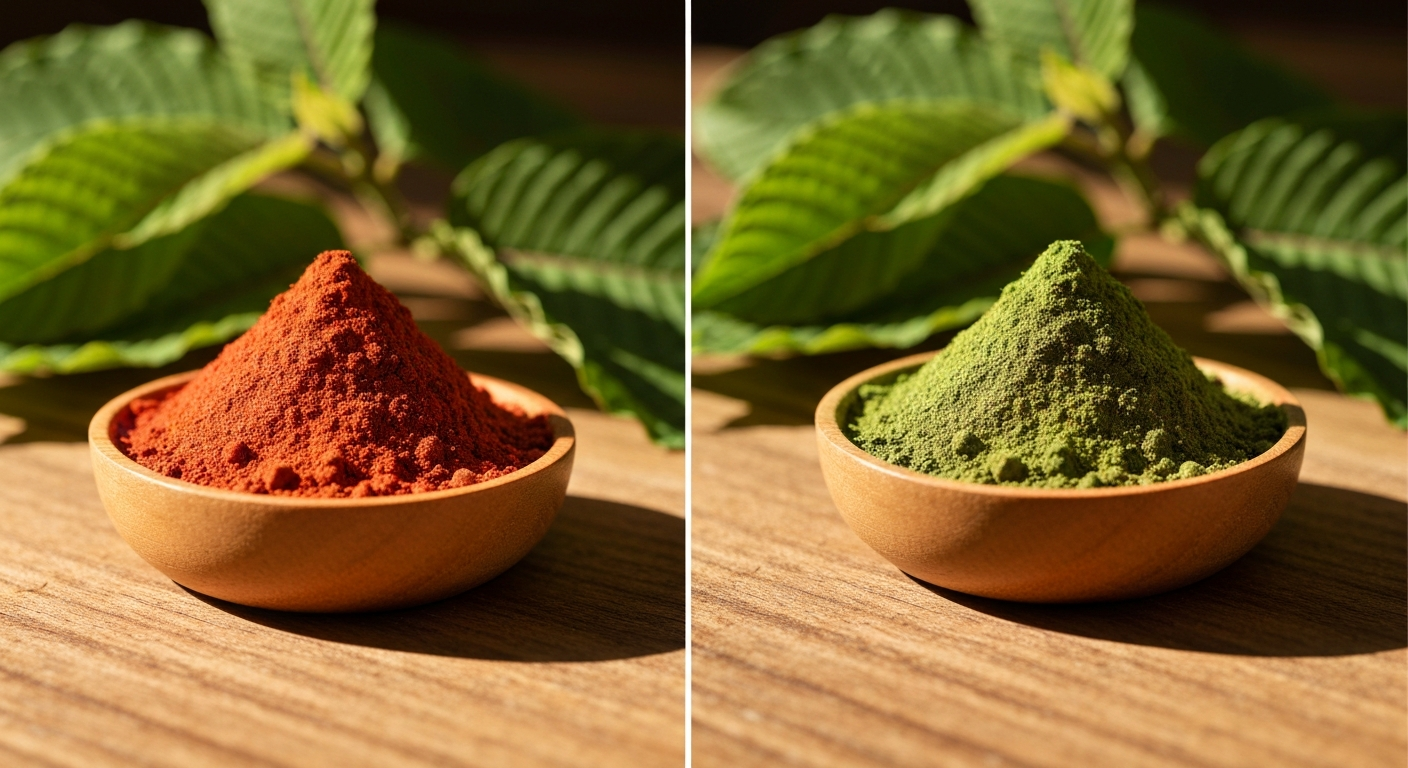
Red, green and white describe the colour of the leaf’s central vein when it’s picked. It’s a way of sorting leaf. Many sites claim each colour does something different. We don’t describe strains that way, because how kratom affects people varies a great deal. Yellow and gold aren’t natural vein colours. They’re leaf that has been dried or fermented for longer, and our yellow vein guide explains more.
Strain name
Names like Maeng Da, Bali, Malay, Horn and Thai are trade names. They come from how kratom has been traded over the years, and they don’t reliably tell you where a particular leaf was grown. Our guide to kratom strains in Canada explains each one.
Grade
Some vendors add a grade. At Kratom Active, “Super” means the powder is milled from the leaf only, with the vein removed. In our experience Super leaf is typically stronger than standard leaf, so start small. Green Bali is the only single strain we sell that isn’t sold under the Super name.
Powder, capsules and extracts
Kratom is sold in several forms. Plain leaf powder is the most common. Capsules contain the same powder in a shell. Extracts, 7-OH products, gummies and drinks are different: they can be far more concentrated than plain leaf, and some contain added or concentrated alkaloids. Health Canada’s warnings apply to all of them.
We sell one thing: plain kratom leaf powder, with no extracts, added alkaloids or 7-OH. Our powder vs capsules guide compares the two most common forms.
The risks to know first
Kratom has real risks, and beginners should understand them before buying.
- Side effects: Health Canada lists drowsiness, nausea, vomiting, seizures, liver toxicity and a rapid heartbeat among the effects reported with kratom products.
- Interactions: don’t mix kratom with alcohol, opioids, benzodiazepines, sleep aids or other sedatives. Kratom can also interact with prescription and over-the-counter medicines, so ask a pharmacist before combining them.
- Dependence: regular daily use can lead to tolerance and dependence, and stopping can cause withdrawal symptoms. That applies to every strain and every vein colour.
- Who shouldn’t use it: anyone under 19, anyone pregnant or breastfeeding, anyone with liver, kidney or heart disease, a seizure disorder or a mental health condition, and anyone with a history of substance use problems.
- Driving: don’t drive or operate machinery if kratom affects you.
Our kratom safety guide covers all of this in more detail, including the warning signs that mean you should stop and get medical help. If you’re ever worried about your use, talk to a doctor or pharmacist, or call 811 in most provinces.
How to choose a vendor
Because Health Canada hasn’t authorized kratom, the market is unregulated and quality is uneven. These are the things worth checking:
- Lab results: a good vendor tests every batch for alkaloid content and screens for heavy metals and microbes, and shows you the certificate of analysis. Our guide to reading a certificate of analysis explains what to look for.
- No health claims: a vendor that says kratom treats or cures anything is breaking the rules, and it’s a sign they’re careless about other things too.
- Small sizes: being able to buy a small pouch first lets you check the product before committing to more. Our smallest pouch is 25 g.
- Packaging: sealed, clearly labelled pouches. Every pouch we ship is sealed and packed to preserve freshness.
- Clear terms: shipping times, payment methods and contact details should be easy to find. Our kratom buyer’s guide goes through this in more depth.
Prices that look too good to be true often are, and very cheap powder is more likely to be old, mislabelled or untested.
What fresh kratom powder looks like
You can tell a fair amount about kratom powder by looking at it. The colour should be even all the way through, with no grey or brown patches. It should smell fresh and earthy, never musty or sour. It should be fine and even, without hard clumps, which often mean moisture has got in. If a pouch shows any sign of mould, don’t use it.
Storing kratom safely
Keep kratom in its sealed pouch or an airtight container, somewhere cool, dark and dry. Label any container you decant into, and keep kratom out of reach of children and pets, the same as you would with medicine.
Frequently asked questions
Is kratom legal in Canada?
Yes. Kratom is legal to buy and possess in Canada, but Health Canada has not authorized any kratom product as a natural health product. We sell to adults 19 and older only.
Which kratom strain should beginners start with?
We don’t recommend strains for beginners or for any purpose. If you’re new, our smallest pouch is 25 g, and our kratom safety guide is worth reading before you buy. If you take medication or have a health condition, talk to a doctor or pharmacist first.
How much kratom should a beginner take?
We don’t give dosage advice. Kratom isn’t authorized by Health Canada as a natural health product, so we don’t recommend amounts or describe effects. Questions about your own use belong with a doctor or pharmacist.
Is kratom safe?
Kratom has real risks, including reported side effects, interactions with alcohol and medication, and dependence with regular daily use. Some people shouldn’t use it at all. Our safety guide sets out who and why.
Can you become dependent on kratom?
Yes. Regular daily use can lead to tolerance and dependence, and stopping can cause withdrawal symptoms. If you’re concerned about your use, talk to a doctor or pharmacist, or call 811 in most provinces.
What does Kratom Active sell?
Plain kratom leaf powder in red, green and white vein, in pouches from 25 g to 1 kg. Every batch is third-party lab tested. We don’t sell extracts, 7-OH products, capsules, gummies or drinks. You can browse every strain in our shop.
Kratom is not authorized by Health Canada as a natural health product, and we make no medical claims about it. Nothing here is medical advice or a recommended dose. If you take medication or have a health condition, talk to a healthcare professional before using kratom.